Mitsubishi Shipbuilding Co., Ltd. Marine Engineering Center Engineering Business Department
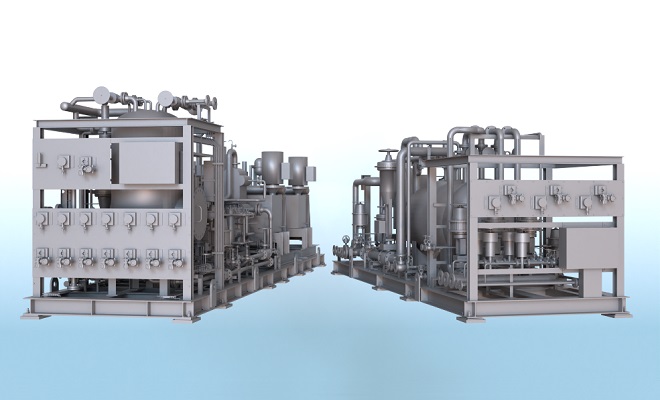
The 80th session of the Marine Environment Protection Committee (MEPC) of the International Maritime Organization (IMO) was held in July 2023 and adopted the 2023 IMO GHG Reduction Strategy to achieve net-zero GHG emissions from international shipping by 2050. This was followed by MEPC 83, which approved the IMO Net-Zero Framework as "mid-term measures" for reducing GHG emissions in line with the aforementioned strategy. However, an extraordinary MEPC session, which was convened in October 2025, decided to postpone its adoption by one year, despite the expectation that the movement toward decarbonization of international shipping would be accelerated through the mid-term measures such as "more stringent regulations on GHG emissions from marine fuels" and "facilitation of decarbonization by the IMO Net-Zero Fund." Meanwhile, we have been placed in a now-or-never situation regarding reducing GHG emissions. Emitting no CO₂ when burned, ammonia is attracting attention as one of the next-generation marine fuels that can significantly contribute to the reduction of GHG emissions in the shipping industry. Because it is a toxic fluid, ammonia requires on-board technology for safe handling and an ammonia gas abatement system to safely dispose of excess ammonia. This report presents the ammonia fuel handling system of Mitsubishi Shipbuilding Co., Ltd. called "MAmmoSS®", which is indispensable to ammonia-fueled ships.