Development of Biofuel Production System with High Energy Efficiency and Excellent Economic Performance:
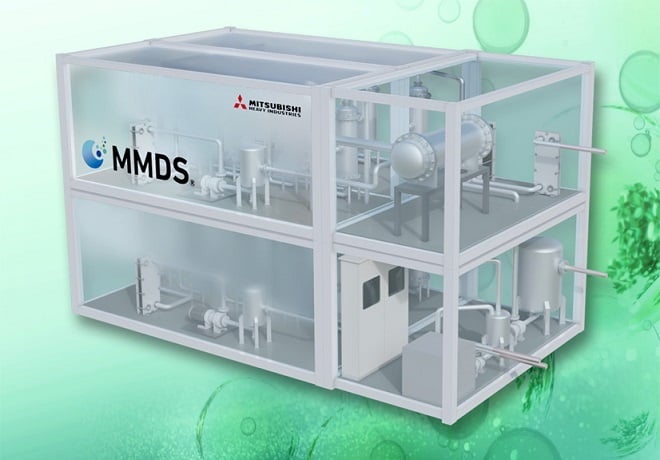
MMDS® (Mitsubishi Membrane Dehydration System)
Bioethanol is gaining attention as a clean fuel alternative to gasoline and as a feedstock for next-generation sustainable aviation fuel (SAF). Global ethanol consumption has steadily increased over time, with the exception of a temporary decline caused by the COVID-19 pandemic. Furthermore, if full-scale SAF production begins in the U.S., demand for ethanol as a SAF feedstock is expected to grow rapidly. For bioethanol to be used as fuel, it is essential to remove moisture from the product during the final stage of production. Currently, approximately 60% of the energy consumed in bioethanol production is used in the distillation and dehydration processes. Therefore, reducing the energy consumption of the dehydration process is crucial. Many bioethanol plants, built primarily in the 2000s, are now aging, leading to increased demand for facility upgrades. Research and development efforts are underway to create a highly efficient membrane separation dehydration system that reduces energy consumption. This report addresses the proposal to replace existing systems with this advanced technology as part of plant modernization. Mitsubishi Heavy Industries, Ltd. is actively promoting the development and commercialization of this energy-efficient membrane separation dehydration system for bioethanol—a plant-derived clean fuel. The goal is to accelerate the adoption of decarbonization technologies and contribute to building a sustainable, carbon-neutral society.