


Press Information
MHI-AC&R Develops and Launches "N-Bleath" Compact Ultra-Low Temperature Brine Chiller Using Nitrogen Refrigerant
-- Electric Turbo from MHIET Allows for Compactness and High Efficiency --
-- Electric Turbo from MHIET Allows for Compactness and High Efficiency --

SHARE


・ Using the natural refrigerant nitrogen helps protect the ozone layer and curb global warming, and being PFAS-free reduces the environmental impact
・ The compact electric turbo provides both weight reduction and high energy-saving performance, improving the energy-saving performance of N-Bleath
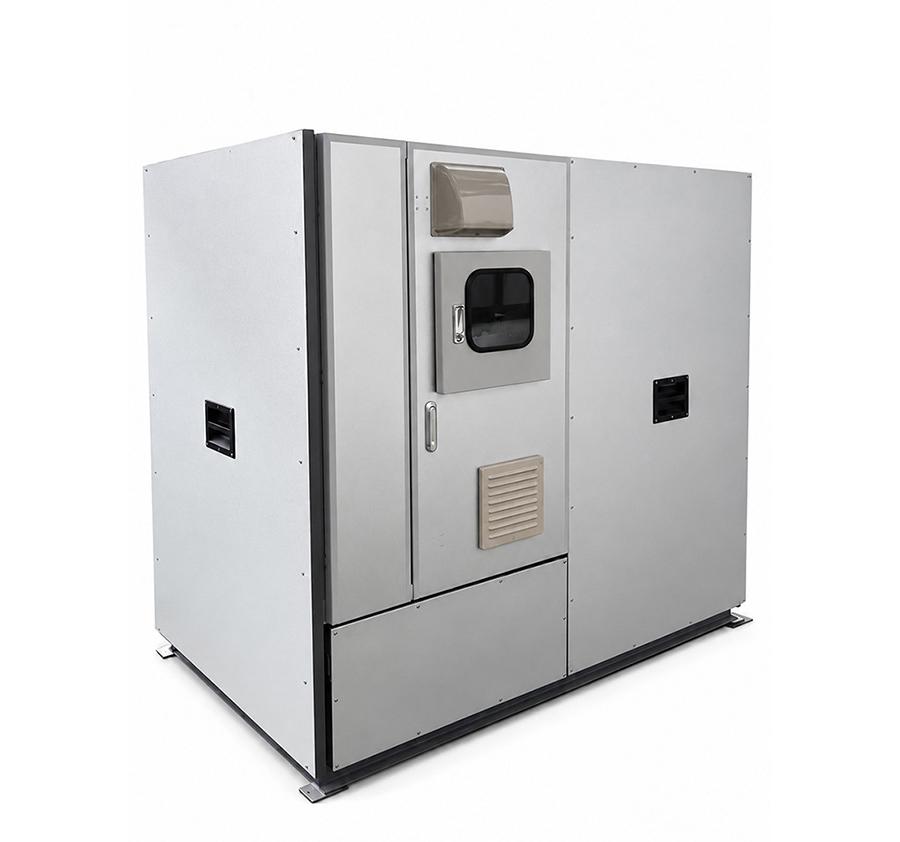
Compact Ultra-Low Temperature Brine Chiller "N-Bleath"
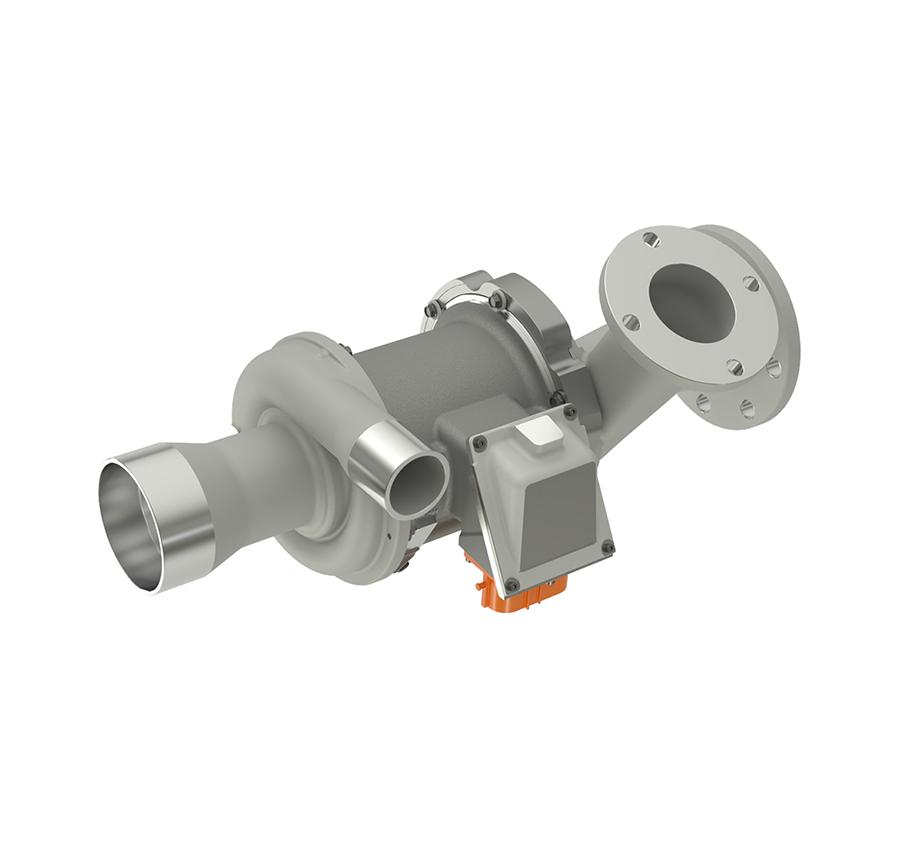
Compact Electric Turbo
Tokyo, August 20, 2026 - Mitsubishi Heavy Industries Air-Conditioning & Refrigeration Corporation (MHI-AC&R), a part of Mitsubishi Heavy Industries (MHI) Group, has developed N-Bleath,(Note1) a compact brine chiller that uses nitrogen (N2), a natural refrigerant, and is capable of handling ultra-low temperature ranges. Sales are scheduled to begin in April 2027. Nitrogen is a natural refrigerant with an ozone depletion potential (ODP)(Note2) and global warming potential (GWP)(Note3) of zero, contributing to the protection of the ozone layer and curbing global warming. Further, as a completely PFAS-free refrigerant, nitrogen contributes to reducing environmental impacts and health risks. Additionally, the unit is equipped with a newly developed compact electric turbo(Note4) from Mitsubishi Heavy Industries Engine & Turbocharger, Ltd. (MHIET). This enables product miniaturization and high efficiency.
N-Bleath utilizes the air refrigerant cycle technology adopted by MHI-AC&R over many years of research and development, allowing it to handle a wide range of ultra-low temperatures, from -40℃ to -100℃, with proprietary technology (patent pending) providing exceptional load following capability. As such, expected use cases cover various fields and applications, including process cooling in the medical, pharmaceutical, chemical, and semiconductor sectors, as well as environmental testing in the aerospace and automotive sectors.
The unit has a compact and modular design, offering space savings and improved backup capabilities. This lessens the installation constraints inherent with conventional large units and reduces equipment downtime risk. Further, because nitrogen is used as a refrigerant, the unit has a low environmental impact and is safe for people. Additionally, since the unit is not subject to regulations such as Japan's High Pressure Gas Safety Act, maintenance and operation are straightforward.
MHIET's compact electric turbo combines a high-performance impeller(Note5) and an ultra-high speed motor —developed using aerodynamic performance(Note6) and high-speed rotation technologies cultivated through MHIET's turbocharger development—achieves both a compact, lightweight form factor and outstanding energy efficiency. By adopting oil free bearings, the unit eliminates the need for periodic lubricating oil changes, significantly reducing maintenance requirements. Moreover, because of the advanced thermal insulation, the turbo is capable of cooling into ultra-low temperature ranges below -100℃. Leveraging the energy-saving capabilities, cooling performance, and environmental benefits of this compact electric turbo, MHIET will continue to explore its potential applications across a diverse product lineup and drive the creation of new value in the cold heat and energy sectors.
Going forward, MHI Group will promote the widespread adoption of cooling systems utilizing PFAS-free natural refrigerants with ODP and GWP factors of zero, and by supplying compact electric turbos with high energy-saving performance, contribute to reducing environmental impacts in the ultra-low temperature market.
- 1Brine is a type of coolant. N-Bleath uses brine cooled with nitrogen to absorb and carry away heat from equipment or systems. For more details, see the following press release.(Japanese only)
https://www.mhi-mth.co.jp/business/engineering/cooling-freezing/n2/ - 2Ozone depletion potential (ODP) is a coefficient expressing the relative amount of degradation to the ozone layer compared to trichlorofluoromethane (CFC-11), a refrigerant previously in wide use which has a fixed ODP of 1.0. The lower the ODP, the lower the destructive impact on the ozone layer.
- 3Global warming potential (GWP) is a coefficient relative to CO2, which has a fixed GWP of 1.0. The lower the GWP factor, the less impact on the environment.
- 4For details about the compact electric turbo, see the following.(Japanese only)
https://www.mhi.com/jp/group/mhiet/products/turbocharger/compact-electric-turbo - 5The impeller is a bladed rotor inside the turbocharger. It rotates to compress and expand air and refrigerant.
- 6Technology to improve aerodynamic performance maximizes the energy-saving performance of electric turbos.

About MHI Group
Mitsubishi Heavy Industries (MHI) Group is one of the world’s leading industrial groups, spanning energy, smart infrastructure, industrial machinery, aerospace and defense. MHI Group combines cutting-edge technology with deep experience to deliver innovative, integrated solutions that help to realize a carbon neutral world, improve the quality of life and ensure a safer world. For more information, please visit www.mhi.com or follow our insights and stories on spectra.mhi.com.