


Press Information
MHIEC Completes Rebuild of Nagasaki City East Plant

SHARE


・ Two newly-installed stoker-type incinerators will provide waste processing capacity of 210 tpd
・ Operation to start on June 16, with contract also including operation and maintenance for 20 years
・ Maximization of energy utilization expected to support advancement of Nagasaki's quest to become "zero carbon city"
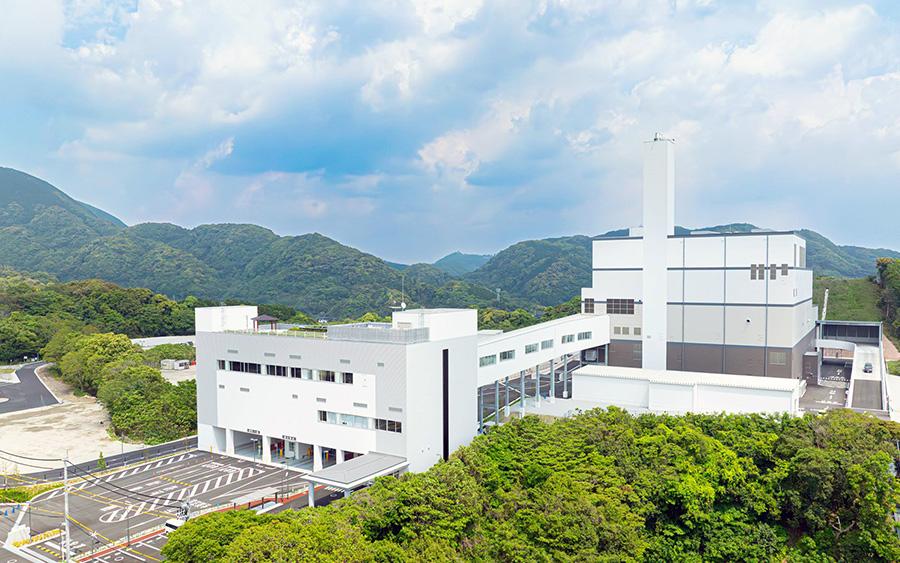
Nagasaki City East Plant
Tokyo, June 29, 2026 - Mitsubishi Heavy Industries Environmental & Chemical Engineering Co., Ltd. (MHIEC), a part of Mitsubishi Heavy Industries (MHI) Group, has completed the rebuilding of the East Waste-to-Energy Plant in Toishimachi, Nagasaki City as part of a contract received from the Nagasaki Municipal Government in 2022. The plant has been in full operation since June 16.
This rebuilding work was carried out due to the superannuation of the previous facility. Under the DBO(Note1) contract, operation and maintenance services at the plant will be performed over a period of 20 years by Nagasaki Higashi Eco-Creation Co., Ltd., a Special Purpose Company (SPC) created with investment(Note2) from MHIEC and MHI Group's Jukan Operation Co., Ltd. (President: Tatsusaburo Fujiwara; Headquarters: Kozen-machi, Nagasaki City; hereinafter JKO).
The plant comprises two stoker-type incinerators(Note3) with a processing capacity of 105 tons per day (tpd) each, providing a total waste processing capacity of 210 tpd, and related equipment, delivering a power generating capacity of 4,940 kW through steam turbine power generating equipment. Heat energy generated during waste processing will be used for high-efficiency power generation and to supply high-temperature water to the nearby Nagasaki Higashi Park Community Facility. By maximizing use of energy, the plant will contribute to the advancement of Nagasaki's quest to be a "zero carbon city."
MHIEC took over MHI's waste treatment plant business in 2008, acquiring the technological development capabilities in environmental systems and broad-ranging expertise in the construction and operation of waste management facilities both in Japan and overseas that MHI honed over many years. A strength of this company is its ability to propose total solutions from construction to operation based on its extensive track record. Going forward, MHIEC will continue to proactively make proposals to extend the life of existing waste treatment facilities, take measures against global warming, and reduce lifecycle costs (LCC) such as maintenance and management costs to contribute to the decarbonization of energy through the collection of energy from waste.
- 1Under a DBO (design, build, operate) contract, a local agency or other public body procures necessary funding and entrusts a facility's design, construction and operation responsibilities to a private company while retaining its ownership.
- 2MHIEC holds an 85% stake in the company, and JKO the remaining 15%
- 3A stoker-type incinerator injects air from beneath heat-resistant fire grates, mixing the waste and other material by pushing it up, and allowing for efficient incineration. It is the most common system used for municipal solid waste.

About MHI Group
Mitsubishi Heavy Industries (MHI) Group is one of the world’s leading industrial groups, spanning energy, smart infrastructure, industrial machinery, aerospace and defense. MHI Group combines cutting-edge technology with deep experience to deliver innovative, integrated solutions that help to realize a carbon neutral world, improve the quality of life and ensure a safer world. For more information, please visit www.mhi.com or follow our insights and stories on spectra.mhi.com.