


Press Information
Completed the first mission of the "DASSAI MOON Project"
-- DASSAI and Mitsubishi Heavy Industries succeeded in the first sake brewing experiment in space --
-- DASSAI and Mitsubishi Heavy Industries succeeded in the first sake brewing experiment in space --

SHARE


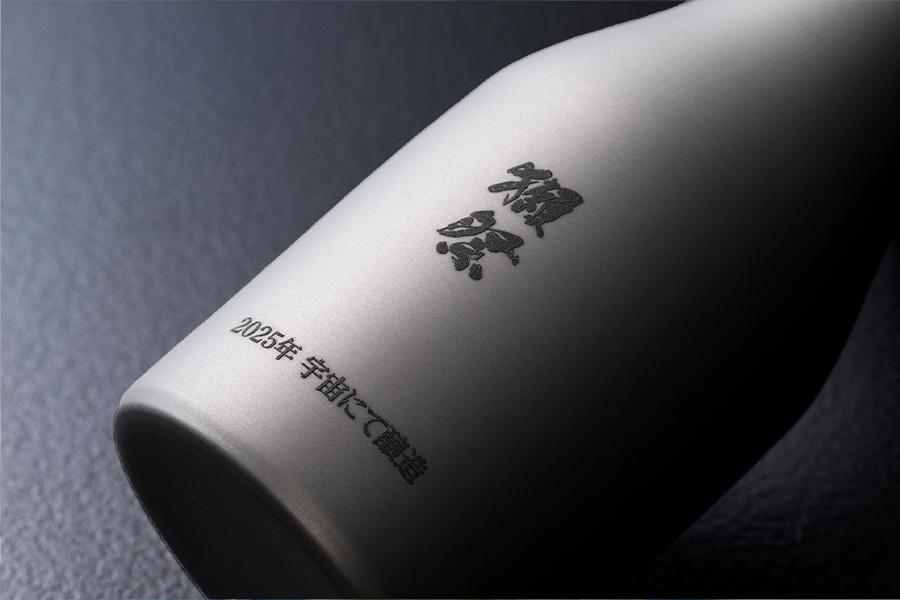
DASSAI Inc. (Headquarters: Iwakuni, Yamaguchi; hereinafter "DASSAI") and Mitsubishi Heavy Industries, Ltd. (Headquarters: Chiyoda-ku, Tokyo; hereinafter "MHI") have successfully completed the first mission of the "DASSAI MOON Project", an initiative aimed at producing sake on the surface of the Moon.
In this mission, specialized brewing equipment jointly developed by DASSAI and Mitsubishi Heavy Industries, along with sake raw materials, were launched to the International Space Station (ISS). The experiment took place within JAXA's experimental facilities aboard the Japanese experiment module "Kibo," where conditions mimicking lunar gravity were established. Under these conditions, the alcoholic fermentation process of sake was successfully confirmed for the first time in human history.
Following fermentation aboard "Kibo," the mash was returned to Earth and subsequently refined into sake at DASSAI's headquarters brewery in March of this year. With this achievement, the initially planned first mission of the "DASSAI MOON Project" has been successfully completed.
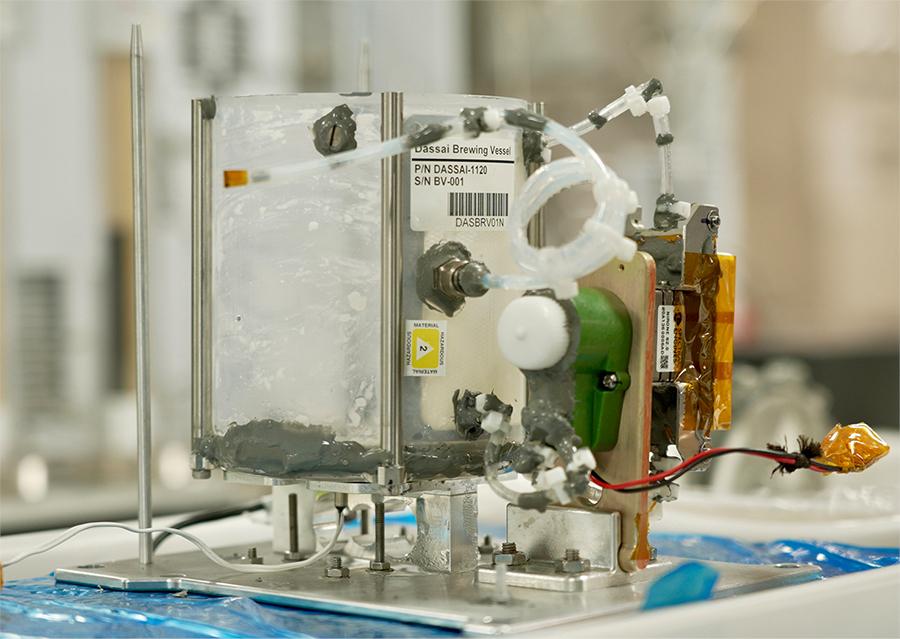
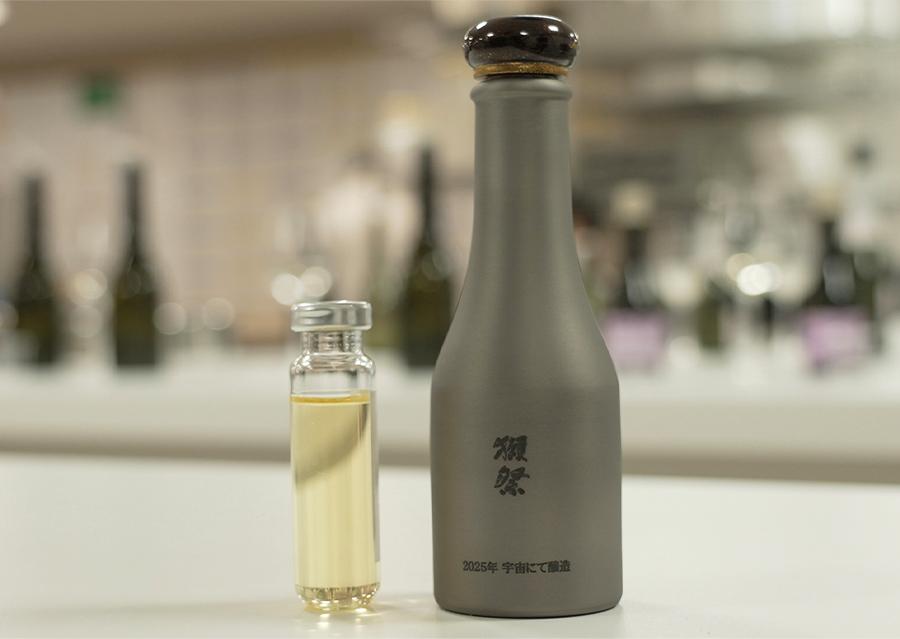
Brewing equipment returned from the ISS (left) and completed space brewing sake (right)
◆Results of this mission
Achievement of the first human sake brewing outside the Earth: Analysis of the mash obtained from the brewing test conducted aboard "Kibo" confirmed that the alcohol content reached 12%. This result demonstrates experimentally that sake production is feasible even under lunar-gravity conditions using a process comparable to that on Earth. At the same time, orbital data showed that fermentation progressed more slowly than under terrestrial conditions, suggesting that differences in gravity may influence the rate of fermentation. Further detailed studies are planned to better understand these effects.
Development of Space Brewing Equipment: The sake brewing equipment developed and manufactured by MHI operated effectively in the simulated lunar-gravity environment. The stirring mechanism of the brewing equipment supported the fermentation of the samples, while a set of sensors continuously measured temperature and alcohol concentration.
Completion of DASSAI MOON -Space Brewing-: Approximately 260g of space-brewed mash returned to Earth were pressed at DASSAI's headquarters brewery, yielding 116ml of sake. Of this, 100ml was packaged in titanium bottles and released by DASSAI at a price of 110 million yen (tax included) as a symbolic expression of challenge. Proceeds from the sales will be donated to support Japan's space development efforts.
Application of fermentation technology in the space industry in the future: The sake lees obtained from this mission will undergo detailed compositional analysis in collaboration with the Higashitani Laboratory at Tohoku University. This research aims to verify potential genetic changes in yeast under space conditions and to identify differences between fermentation in space and on Earth. The findings are expected to contribute to the future development of the space industry.
◆Overview of the DASSAI MOON Project and this mission
The "DASSAI MOON Project" is an initiative aimed at establishing sake breweries on the Moon and brewing DASSAI there, with the long-term goal of enhancing quality of life in a future lunar environment. As the first step of this effort, DASSAI and MHI utilized the KIBO Commercial Utilization Program for the Japanese Experiment Module "Kibo" aboard the International Space Station (ISS) to simulate lunar gravity conditions. A demonstration test was conducted to validate the concept of sake production technology in space. During this mission, sake brewing raw materials and specialized equipment were transported to "Kibo," where fermentation was observed and confirmed over a two-week period in a space environment.
Past link: https://dassai.com/us/news/info/007298.html
◆Mission progress
| In 2021 | On the occasion of a lecture at the Nagoya Chamber of Commerce and Industry, the project concept was created: "If humans migrate to the moon in the future, we want to brew sake on the moon as well." | ||
| 2024 | The DASSAI MOON project is launched. | ||
| October 26, 2025 | Using a domestic rocket, H3 Launch Vehicle No. 7, a new domestically produced space station supply vehicle, and HTV-X1, brewing equipment and sake raw materials is transported from the Tanegashima Space Center to the ISS. | ||
| November 25, 2025 | With operations conducted by astronaut Kimiya Yui, brewing experiments begin on board the ISS "Kibo". | ||
| December 8, 2025 | After the two-week experimental period, the sample is transferred to a freezer on the ISS. | ||
| February 27, 2026 | The sample is returned to Earth from the ISS and collected in Los Angeles, USA. | ||
| March 13, 2026 | The collected samples arrive at the DASSAI headquarters brewery. | ||
| March 24, 2026 | Based on the returned mash, DASSAI MOON -Space Brewing- is completed. | ||
◆Challenge with All Japan
Another key theme of this mission was to "execute the project through Japan's technological capabilities." In addition to DASSAI and MHI serving as the primary stakeholders, the mission was supported through space experiments and utilization of the ISS "Kibo" under the KIBO Commercial Utilization Program. Technical and operational support was provided by the Japan Aerospace Exploration Agency (JAXA), Manned Space Systems Co., Ltd. (JAMSS), Space BD Inc. and DigitalBlast, Inc. The transport from Tanegashima to the ISS was carried out using Japan-developed technologies, including the H3 rocket and the next-generation HTV-X1 resupply vehicle.
Furthermore, on-orbit operations were conducted by Japanese astronauts, ensuring that Japanese technology played a central role throughout the entire mission. In addition, Takasago Electric Industry, Inc. was involved from the project planning stage, while Aichi Prefecture (Aichi Industrial Science and Technology Center), Interface Corporation and Kobo Okura Co., Ltd. contributed to the development and manufacturing of the brewing equipment. Satake Corporation handled the processing of raw materials. The mission logo was designed by Mr. Chuya Koyama, author of the manga Space Brothers, and Nippon Express Co., Ltd. was responsible for transporting the returned materials. The project also received broad support from numerous Japanese companies, including Japan Airlines Co., Ltd. (JAL). While international cooperation was essential, Japanese companies and organizations remained at the core of the mission and played a leading role in bringing it to a successful completion. With the completion of this mission, we would like to take this opportunity to express our sincere gratitude to all companies and institutions that provided their cooperation and support. At the same time, we hope to showcase Japan's strong presence in space development to the world.
We believe that Japan's technological capabilities will help realize a future in which people can live vibrantly even on the Moon.
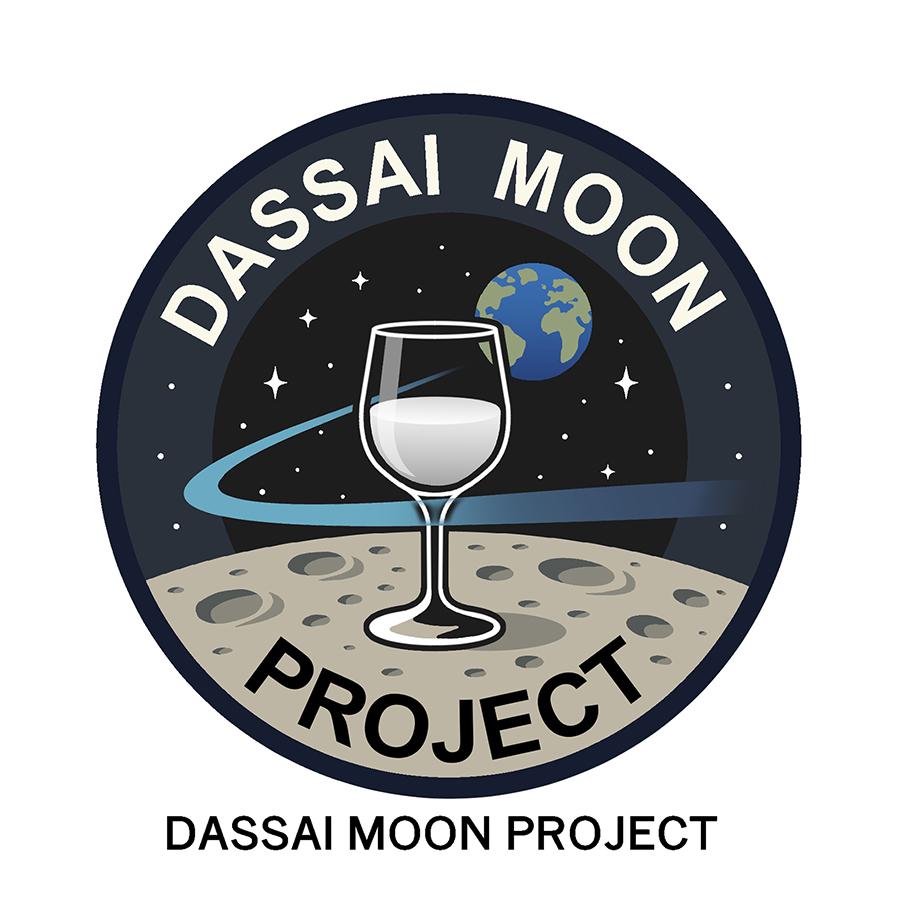
DASSAI MOON Project Logo: Looking ahead to a future in which humans live on the Moon, the logo was created with the theme of DASSAI's aspiration to be close to and enrich the happiness of people in that environment. The design was led by Mr. Chuya Koyama, author of the manga Space Brothers.
■"DASSAI MOON Project" special site: https://dassai.com/moon/en/

About MHI Group
Mitsubishi Heavy Industries (MHI) Group is one of the world’s leading industrial groups, spanning energy, smart infrastructure, industrial machinery, aerospace and defense. MHI Group combines cutting-edge technology with deep experience to deliver innovative, integrated solutions that help to realize a carbon neutral world, improve the quality of life and ensure a safer world. For more information, please visit www.mhi.com or follow our insights and stories on spectra.mhi.com.