

Development of radiochemical analytical techniques
Long half-life nuclides such as Cl-36 are important nuclides for evaluation from the viewpoint of radioactive waste disposal. However, their concentration is low and they are difficult to detect. Our company is studying the applicability of high-sensitivity analysis using the accelerator mass spectrometer (AMS) owned by the University of Tokyo to improve our technical capabilities.
Since chemical separation to prevent isobaric interference is important in the analysis using AMS, an ultra-sensitive accelerator mass spectrometer, we have established a pretreatment technique to separate S-36 to a level that does not pose a problem in the measurement of Cl-36.
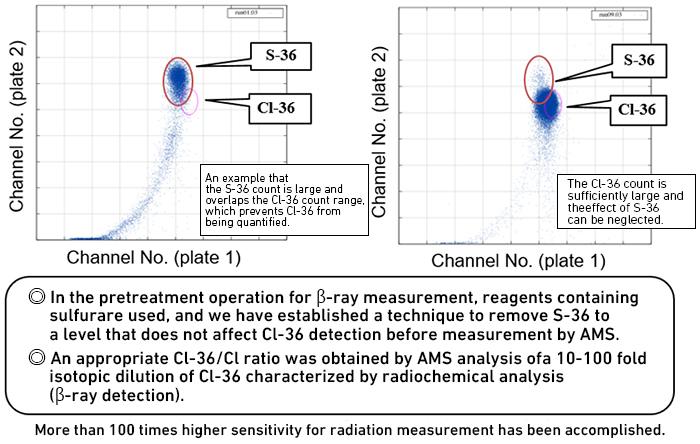
Development of new analytical techniques utilizing advanced equipment
In radiochemical analysis of samples from nuclear facilities, there is a growing need to analyze many types of radioactive nuclides with higher sensitivity and precision than ever before. Our company is developing new analytical techniques for radioactive nuclides, which were previously difficult to analyze, utilizing advanced equipment.
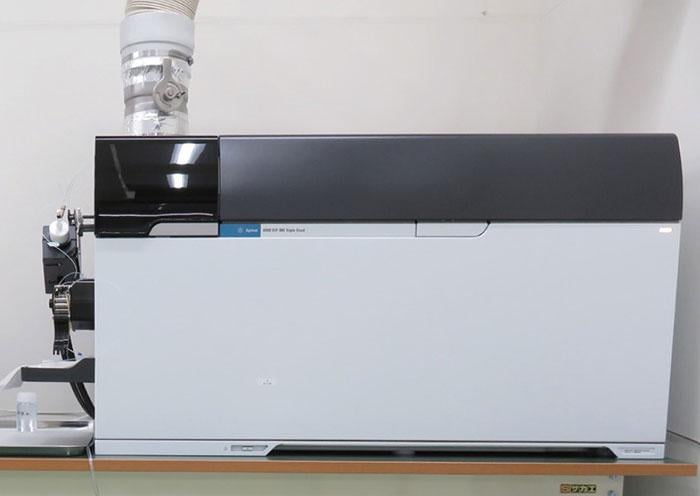
Triple quadrupole ICP mass spectrometer
The advanced equipment is highly effective for analyzing ultratrace radioactive nuclides. Equipped with a collision reaction cell, it is capable of analyzing target radioactive nuclides with high sensitivity and precision by applying chemical reactions with cell gas to eliminate interference with isobars and other substances that would hinder the analysis of target radioactive nuclides.